
There is One Holy Book, the sacred manuscript of nature, the only scripture which can enlighten the reader.
~ Hazrat Inayat Khan
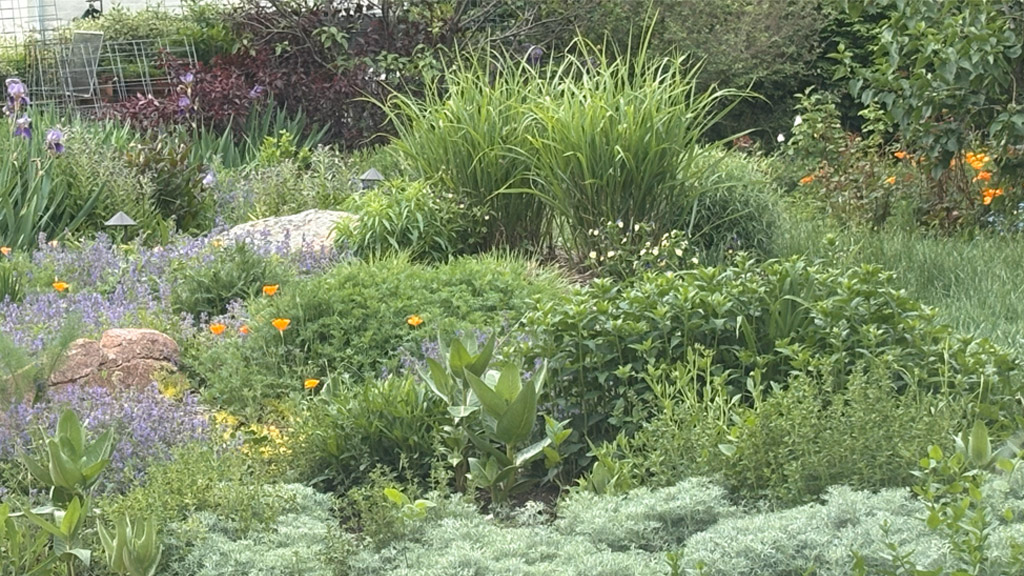
Gaia. The Great Mother. Born out of Chaos. Giving birth to the sky (Uranus), mountains (Ourea), and the sea (Pontus). To the early Greeks she was the primordial personification of the earth, the ancestral mother of all life, representing the planet as a living, self-regulating entity. Consider her the more-than-human world as a presence we can know in relationship. She has seasons, moods, silences… and a way of revealing what cannot be forced. The following practice is recommended for those who desire to form a deeper, more intimate connection with her; for those who wish to avail themselves to the revelations of Gaia as a sacred scripture. The practice centers around one small piece of earth—a garden bed, a corner of yard, a stretch of park—and entering into relationship with it as you would a beloved: with consistency, curiosity, and reverence. Not to take. Not to conquer. But to court… to listen long enough that the land begins to speak in the only language it has ever used: presence.
The Intentions
There are many intentions behind this practice and many opportunities for self-awareness and growth through a commitment to it. Some of these intentions include:
- To form a deeper, more intimate connection with Gaia
- To read from “the sacred manuscript of nature” through revelation and insight
- To extend one’s capacity for caring
- To strengthen one’s ability to commit
- To exercise one’s discipline
- To develop one’s ability to be still, to witness, to listen, to be present
- To open the heart through praise, worship, presence, service, and gratitude
The Practice
First and foremost, there are no hard and fast rules here. These are suggestions for your consideration… an offering… an invitation. Every relationship is different. Being attentive to your inner wisdom is part of the process.
- Identify an area (referred to here as “the land”) out in nature that you will spend regular time with over a specific duration. This could be a garden or a defined section of your yard (see below for additional ideas: The Land).
- Commit to a schedule for connecting with the land over a period of time. The suggestion is to plan on a minimum amount of time at each visit, perhaps 15–30 minutes (see below for additional ideas: The Schedule and the Commitment).
- How you spend your time there is up to you. Use the time to define and develop your relationship with the land. At a minimum, be present and simply observe… witness. There are numerous roles and relationships that may emerge (see below for additional ideas: The Relationship).
- Journaling is highly recommended in order to capture any observations and insights that occur and to document how your relationship with the land emerges and evolves over time.
The Land
The land refers to a section of Earth and all that lives and happens on it. Think of it as a mini-ecosystem… a community. This could be a portion of your back or front yard. It could be a specific garden in your yard… a 4×8 raised bed for example. This could also be a section of land in a nearby park, greenbelt, or open space.
Consider the following suggestions:
- Outside: While you could create an elaborate indoor area of plants and living things (a terrarium, aquarium, solarium, etc.), it would be near impossible to include the complexity, interactivity, and mystery of an outdoor setting. Go outside.
- Access: If you legally own the land, you are presumably freer to explore your relationship with the land. If your housing arrangement does not include land that you own, you certainly can “adopt” a nearby park or some other outdoor area but you may be limited in your ability to interact with the land and thus your relationship may be somewhat constrained. There may be limited hours during which you can visit the land that you don’t own and there may be activities that you cannot explore, such as planting and cultivating, if you were called to it. That may be fine: Every relationship has some form of constraint and many valuable lessons can be learned as a result. Perhaps it is enough to simply be present and witness.
- Nearby: Commitment and consistency are important parts of this process. Realize that different levels of commitment and discipline are required to walk out into your backyard versus traveling to a hidden grove in your favorite state park that is two hours away by car. That may be fine for you… every relationship asks something of us.
- Just the right size: Only you can decide what the “right size” is for this practice. Boundaries are part of any relationship. While forming a relationship with all of nature is a wonderful goal, it may make the practice more tangible if the land is clearly defined.
The Schedule and the Commitment
The intention is to visit the land over a period of time. This might be daily for a month; weekly for 6–months, or monthly for a year. How often you visit (frequency) and how long you stay during each visit (duration) is up to you. The title of this post suggests one year simply because it provides an opportunity to be with the land through a complete cycle of seasons. The important elements are commitment, discipline, and authenticity. If you commit to being with the land every day, then go every day. If that’s too much, then commit to weekly or monthly. But stick to your commitment. If concerns arise that commitment leads to confinement and routine leads to boredom… perhaps this is an opportunity to explore and question the validity of these assumptions. What is the source of this unease?
That being said, we are all human. Things come up that we didn’t anticipate. Change happens. Consider treating the land the same way you would treat your beloved in that situation: Renegotiate. Apologize. Be aware of your inner landscape.
Likewise, authenticity matters. This is not about checking a box simply to say you have done it. As with any relationship, show up. Be present. Let your relationship evolve. Perhaps you allow yourself to anthropomorphize your land a bit. Talk to it. Give it a voice. Ask it its name (perhaps Gaia works for you). Allow its personality to develop. Again… meet it as a beloved.
If this all seems too “out there” or weird (“After all, it’s just a piece of land…”), perhaps that realization and admission alone is valuable.
The Relationship
The relationship you form with the land is really up to the two of you and you may be surprised to find it evolves over time.
- Perhaps you are the student and spend your time meditating, contemplating, attuning, and open to insights.
- Perhaps you are the scientist and observe the ecological interactions of the land, noting the conditions of the soil, classifying the plants and animals that make it their home, documenting the external elements that impact the land.
- Perhaps you are the pagan celebrating life in all its forms, co-cultivating herbs for tinctures and remedies, performing ceremonies to note the seasons’ passage.
- Perhaps you are the gardener amending the soil, planting, weeding, tending, harvesting, nurturing.
The intention is to care for the land and, out of that, to develop a love for the land. In the process of doing so, you very well may find that your overall capacity to care for and love another will grow. Rabbi Dr. Abraham Twerski has a short commentary on love (in which he mentions the concept of “fish love”) that wonderfully exemplifies an important point: we make a mistake if we feel that we give to those whom we love. Rather we love those to whom we give.
Whatever role(s) you play and however you interact with the land, be open to what emerges and allow it to evolve over time.
Final Thoughts
I hope you find this practice worthy of your time and attention. Moreover, I hope you will find it as beneficial and nurturing as I have. I’ll leave you with some thoughts by the eco-historian Thomas Berry:
“We can no longer hear the voice of the rivers, the mountains, or the sea. The trees and meadows are no longer intimate modes of spirit presence. The world about us has become an ‘it’ rather than a ‘thou.’” (Thomas Berry, “The Meadow Across the Creek,” in The Great Work).
“Our relationship with the earth involves something more than pragmatic use, academic understanding, or aesthetic appreciation. A truly human intimacy with the earth and with the entire natural world is needed.” (Thomas Berry, “Human Presence,” in The Dream of the Earth).